
When My Son Asked: “Did America Bomb a Kids’ School?”
At dinner Thursday night my 8-year-old son and 12-year-old daughter began asking about the current conflict with Iran.
I love to be the family history expert. I slipped into explanation mode. I started walking them through the history as best as you can over pasta and vegetables—how Iran was once known as Persia, how the 1979 revolution reshaped the country, how the Iran hostage crisis shaped American memory, and how decades of tension have simmered ever since.
I assumed they would nod politely and move on to something else. But instead my eight-year-old asked a question that stopped me in my tracks and made the entire conversation painfully personal.
“Did America bomb a kids’ school?”
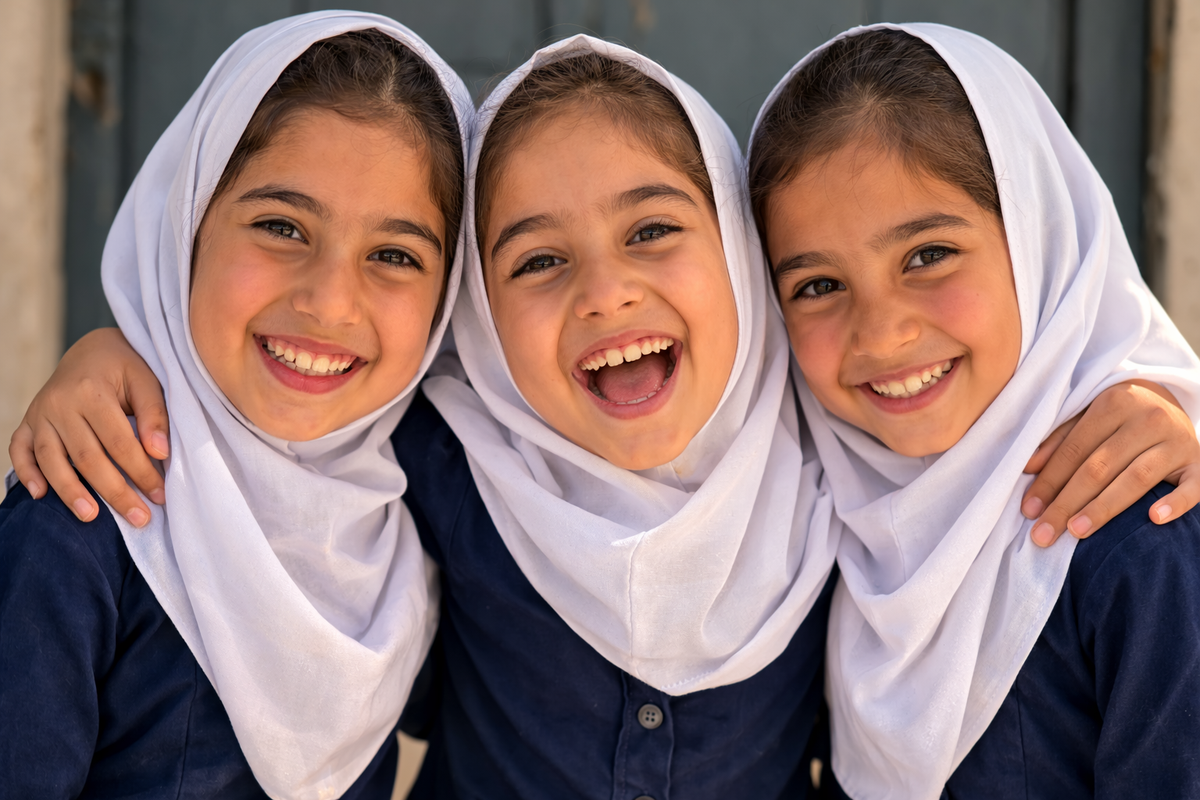
I hadn’t been following the news closely that day. As we sat there at the table, I began learning about the bombing of a girls’ school in Iran and the reported deaths of young students—girls between the ages of seven and twelve.
Suddenly the news was no longer abstract.
I looked across the table at my own daughter.
The girls who died were her age, with the same joys and hopes in life she has.
And my son was asking a question that every Christian parent eventually has to face in one form or another:
What do we do with a world like this?
When War Reaches Children
For most of us, global conflict remains distant. It arrives in headlines and disappears just as quickly.
In this case, reports indicate that a girls’ school in Iran was struck during a bombing campaign, killing young students between the ages of seven and twelve. At this point we do not know with certainty how the school came to be bombed, and the incident is still being investigated. Early reports suggest the strike may have been aimed at a nearby military facility, but the details remain contested.
When civilians die in war, we often hear the phrase collateral damage. The language is clinical. Detached. It makes tragedy sound like a technical malfunction.
But followers of Jesus should hesitate before using that language too quickly.
Those girls were not variables in a military calculation.
They were daughters.
Students.
Children made in the image of God.
And if we are Christians trying to live sent into the world with the heart of Christ, then moments like this force us to wrestle with difficult questions about war, justice, and how disciples of Jesus should respond when violence touches the innocent.
The Christian Tradition and the Reality of War
Christians have wrestled with the morality of war for centuries.
The early church often took a deeply skeptical view of participation in war. But as Christianity spread throughout societies and governments, theologians like Augustine and later Thomas Aquinas developed what became known as Just War Theory.
It is important to understand what this framework is—and what it is not.
Just War Theory is not a Christian permission slip for nations to wage war.
It is an attempt to place moral limits on violence in a fallen world.
It asks two fundamental questions:
- When is it morally permissible to go to war?
- How must war be conducted if it occurs?
Christians have debated the first question for centuries. War should only be undertaken as a last resort, with legitimate authority, and for a just cause.
War is sometimes tragically unavoidable in a fallen world (though I’ll admit I am not convinced this particular conflict with Iran meets that threshold).
But even when a war is considered justified, the second question remains.
How it is fought matters deeply.
The Moral Rules of War
Just War thinking insists that even in war, there are lines that must not be crossed.
Two principles are especially relevant when tragedies like the bombing of a school occur.
Distinction
Combatants must distinguish between military targets and civilians.
Civilians are not legitimate targets.
Schools, hospitals, and homes are presumed to be protected spaces.
If civilians are intentionally targeted, the action is not merely tragic—it is morally wrong.
Proportionality
Even when a legitimate military target exists, military leaders must weigh whether the harm to civilians will be disproportionate to the military objective.
In other words, they must ask:
Is the military gain worth the foreseeable cost in innocent life?
Just War theory does not treat civilian casualties as morally insignificant. It treats them as a grave responsibility.
The Tragic Possibility of Double Effect
Christian ethicists sometimes appeal to what is called the Doctrine of Double Effect.
This principle recognizes that an action aimed at a legitimate objective may have unintended consequences.
For example, if a military strike targets a legitimate military installation but unintentionally harms civilians nearby, the action may still be considered morally permissible—but only under very strict conditions.
The harm must not be intended.
And serious efforts must have been made to avoid it.
Even then, the loss of innocent life remains a tragedy that demands accountability, lament, and moral reflection.
The Danger of Numbness
One of the greatest spiritual dangers in a world of constant news is moral numbness.
We scroll past suffering.
We categorize tragedy according to which nation or side is involved.
We quietly decide which deaths matter more.
But the kingdom of God does not recognize those categories.
Jesus did not say, “Love your neighbor—unless they live in a country your nation is in conflict with.”
Every child bears the image of God.
Every child matters to the heart of the Father.
What Jesus Said About Children
Jesus spoke about children with unusual seriousness.
“Whoever welcomes one such child in my name welcomes me.”
— Matthew 18:5
And even more strongly:
“If anyone causes one of these little ones to stumble, it would be better for them to have a millstone hung around their neck…”
— Matthew 18:6
Jesus was not sentimental about children.
He was protective of them.
Their vulnerability mattered to him.
Their dignity mattered to him.
Which means their deaths should matter deeply to us.
A Christian Response
So how should followers of Jesus respond when we hear news like this?
First, we lament.
Scripture gives us language for grief and protest before God. The church should never become a community that quickly rationalizes the suffering of the innocent.
Second, we refuse to dehumanize.
Those girls were not enemy combatants. They were daughters.
Third, we pray for wisdom and peace.
War may sometimes occur in a broken world, but Christians should never grow comfortable with it.
We should always long for the day the prophets described when swords are beaten into plowshares.
Back at the Dinner Table
My son asked a simple question.
“Did America bomb a kids’ school?”
I wish the world were simple enough to give a simple answer.
But I do know this.
The kingdom Jesus came to bring is not built through bombs or missiles.
It is built through sacrificial love.
And until that kingdom fully comes, followers of Jesus will continue to live in the tension of a violent world—seeking justice, grieving suffering, and refusing to forget that every child, everywhere, matters to God.
Even the ones whose names we will never know.